Cloud Computing Market: Evaluating Deployment Models and Service Strategies
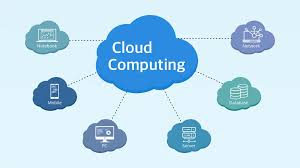
In the ever-evolving digital landscape, organizations are increasingly adopting cloud computing as the foundation of their IT infrastructure. The Cloud Computing Market is growing rapidly, offering businesses scalable, flexible, and cost-effective solutions that foster innovation. A key component of this growth lies in understanding the different deployment models and service strategies available to organizations today.
Exploring Deployment Models
Cloud computing provides various deployment models that cater to different business needs. These models dictate how cloud resources are hosted, managed, and utilized by organizations.
1. Public Cloud
The public cloud is the most common deployment model, where cloud services are delivered over the internet and managed by third-party providers. In this model, organizations share computing resources with other businesses, significantly lowering the cost of infrastructure and providing unmatched scalability. Services such as IaaS, PaaS, and SaaS are typically offered in public cloud environments.
The Cloud Computing Market has witnessed widespread adoption of public cloud services due to their cost-effectiveness and ease of deployment. Major cloud providers, such as Amazon Web Services (AWS), Microsoft Azure, and Google Cloud, have helped facilitate this model’s growth.
2. Private Cloud
Private cloud deployment, on the other hand, involves cloud resources being dedicated solely to a single organization. This model provides higher security, control, and customization compared to the public cloud. Businesses with stringent compliance requirements or specific performance needs often turn to private cloud deployments to safeguard sensitive data and ensure consistent application performance.
As businesses increasingly focus on data privacy, the private cloud model's popularity within the Cloud Computing Market has grown, especially in regulated industries like finance, healthcare, and government.
3. Hybrid Cloud
Hybrid cloud combines both public and private cloud environments, allowing organizations to benefit from the flexibility of the public cloud while maintaining the security and control of the private cloud for critical workloads. This deployment model enables businesses to choose where and how their data and applications are hosted, depending on specific requirements.
The hybrid cloud model is becoming increasingly important as organizations look to optimize their cloud resources and enhance operational efficiency. By leveraging both models, the Cloud Computing Market provides businesses with the ability to scale effectively while maintaining compliance and security.
4. Multicloud
While hybrid cloud involves combining public and private clouds, multicloud refers to the use of multiple cloud services from different providers. This strategy allows organizations to avoid vendor lock-in, gain access to specialized services from various providers, and optimize performance across different applications and regions.
As businesses look to maximize flexibility, multi cloud strategies are becoming a crucial part of the evolving Cloud Computing Market. This model helps organizations balance the strengths and weaknesses of different cloud providers and services.
Evaluating Service Models
In addition to deployment models, organizations must also evaluate the different service models offered within the cloud. These service models determine how much control and responsibility an organization retains over its IT infrastructure.
1. Infrastructure as a Service (IaaS)
IaaS provides virtualized computing resources over the internet, including storage, networking, and computing power. With IaaS, businesses can avoid investing in expensive physical hardware while still maintaining control over their operating systems and applications.
The Cloud Computing Market has experienced significant growth in IaaS adoption, as it provides businesses with the flexibility to scale resources on-demand and focus on their core competencies rather than managing hardware.
2. Platform as a Service (PaaS)
PaaS offers a complete platform for developing, running, and managing applications without the complexities of managing the underlying infrastructure. This service model enables businesses to focus solely on coding and application development, reducing time-to-market for new products and services.
PaaS is particularly attractive to startups and enterprises looking to streamline application development while benefiting from cloud scalability. As part of the broader Cloud Computing Market, PaaS plays a critical role in facilitating application innovation.
3. Software as a Service (SaaS)
SaaS is the most user-friendly service model, offering fully managed software applications that are hosted in the cloud. From customer relationship management (CRM) to enterprise resource planning (ERP), SaaS applications cover a wide range of business functions. With SaaS, businesses can access software applications on-demand without worrying about software updates, maintenance, or infrastructure.
The SaaS segment within the Cloud Computing Market is booming as businesses look to adopt ready-to-use applications that improve productivity, reduce operational costs, and enhance collaboration.
Strategic Considerations for Cloud Adoption
When adopting cloud computing, businesses must carefully evaluate their specific needs, industry requirements, and the capabilities of each deployment and service model. The Cloud Computing Market offers a wide range of options, but selecting the right model requires understanding the long-term strategic goals of the organization and the evolving nature of cloud technologies.
The Future of Cloud Computing
The Cloud Computing Market is expected to continue expanding as cloud service providers innovate and offer more advanced features such as artificial intelligence integration, improved security measures, and edge computing capabilities. By leveraging the right cloud models and strategies, organizations can achieve greater flexibility, efficiency, and scalability, positioning them for long-term success in an increasingly digital world.


